Professional Teeth Whitening In Sylvania & Toledo, OH
At Our Dental Office in Sylvania
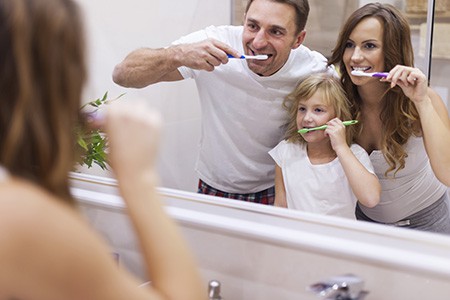
If you are like most people, you probably enjoy at least one of the following products on a daily basis: coffee, tea, wine or soft drinks. While most of us regularly consume these products, they can stain our pearly whites. Other products that have the same effect include tobacco and some medications. Couple these factors with normal aging, and you have just a handful of the culprits that cause serious discoloring and stains on your teeth. While this can be embarrassing, most of us don’t want to give up our daily dose of caffeine. Thankfully, your problems can be washed away with the help of Dental Health Associates.
Our teeth whitening services allow you to enjoy your daily indulgence, while making your smile more attractive!
Cosmetic dentistry has become so advanced that you can now have whiter teeth with minimal effort in the privacy of your own home. There are now advanced teeth whitening products that are effective, attractive, and affordable. A dazzling smile isn’t just for celebrities anymore; it’s for YOU, because you’re worth it! Our dental team can work with you to get the effect you’re after and the “Hollywood Smile” you have always wanted.
More about Professional Teeth Whitening Treatment
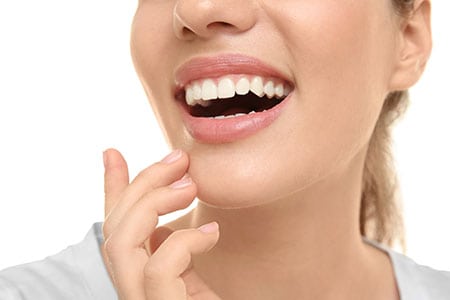
In-office professional teeth whitening treatment is quick, convenient and effective. Teeth can look up to eight shades lighter in just a few weeks. Another advantage of professional bleaching is that the dentist can control the concentration of the bleaching agent and supervise treatment to prevent any tooth sensitivity.
Prior to beginning treatment, the teeth are cleaned and examined for any areas of decay or disease. If any decay, cracks or gum disease is detected, the whitening treatment may be delayed until the situation has been addressed (whitening can irritate these conditions). Photographs may be taken of the teeth and the tooth color measured on a special guide to provide a benchmark to assess the whitening progress.
Teeth whitening can be performed on its own for beautiful results, or it can be performed to complement a new set of porcelain veneers or to brighten newly stained teeth after Invisalign treatment. A set of take-home bleaching trays may be provided either to achieve a satisfactory level of whitening or to maintain the results.
Professional Teeth Whitening vs. Over-the-Counter (OTC) Products

There are entire shelves devoted to whitening products at supermarkets and grocery stores. These whitening strips and toothpastes promise visible results, but most can’t deliver that brighter smile you’re looking for at the end of your treatment.
Whitening strips tend to focus on the front six teeth and don’t conform to your teeth properly, causing uneven bleaching and gum irritation. The whitening agents used in OTC strips are often too weak to provide meaningful improvement, but some may be too strong and affect oral health. Tooth sensitivity and tissue irritation are the most common complaints among patients using OTC whitening products.
Whitening toothpaste sounds appealing to many people. Unfortunately, the gel does not come into contact with the teeth long enough to whiten them and washes away when you rinse.
Professional teeth whitening is guaranteed to brighten your smile by several shades. Whether you choose an in-office treatment, customized take-home trays, or a combination of both, professional-grade bleaching agents are safe and effective, providing reliable results that don’t harm your gum tissue or tooth enamel. Going to a dentist for teeth whitening ensures you reach your cosmetic goals for your smile without wasting time on OTC products that may provide little to no improvement.
What to Expect After Teeth Whitening
Cosmetic whitening may cause tooth sensitivity due to the higher concentration of the bleaching agent. However, tooth sensitivity after teeth whitening is mild and temporary. Patients with take-home whitening trays may develop sensitivity two or three days after starting their whitening regimen that resolves a few days after treatment ends.
Most patients experience tooth sensitivity for one to three days after in-office treatment. You can ease discomfort by using a gentle toothpaste designed for sensitive teeth and taking acetaminophen or ibuprofen.
Teeth Whitening Results
Professional teeth whitening makes your teeth several shades whiter. Depending on the starting color of your teeth, it may be unreasonable to expect blindingly white teeth. You may choose to repeat the teeth whitening procedure a few months later to enhance your results further.
You can expect to enjoy your results for about one year. For results that last as long as possible, avoid smoking and drinking beverages that commonly stain the teeth like red wine, coffee, tea, and dark sodas. This advice is especially true in the first few days after your whitening since your teeth are particularly susceptible to staining during this period.
FAQs
Does teeth whitening work on all tooth stains?
 Tooth stains may be intrinsic or extrinsic. Extrinsic tooth stains develop on the outer surface layer of your tooth (enamel) and are typically caused by dark-colored foods or beverages, such as coffee, tea, berries, and wine. They may also develop from tobacco use. Teeth whitening works remarkably well in removing extrinsic stains and restoring a brighter smile.
Intrinsic stains develop underneath the tooth enamel on the dentin layer and do not respond to teeth whitening. These deep tooth stains are often caused by tooth injuries, using specific antibiotic medication in childhood, some medical conditions, excessive fluoride treatment during childhood, and genetic disorders. While professional-grade whitening or bleaching agents may improve intrinsic stains, patients may achieve better results by covering the discoloration with porcelain veneers, dental bonding, or dental crowns, depending on the severity.
Will teeth whitening damage my tooth enamel?
Professional teeth whitening through a dentist is a safe way to brighten your smile. The American Dental Association (ADA) recommends professional teeth whitening over OTC products for the best results and to preserve teeth and oral tissues. Over-using whitening products can damage tooth enamel and gum tissue if the bleaching agent is too abrasive.
Can teeth whitening work on crowns, bridges, composites, or dental bonding?
Teeth whitening cannot change the color of existing dental restorations. Dental crowns, tooth-colored fillings, porcelain veneers, bridges, and dental implants are all designed to match the shade of your teeth when fitted and cemented in your mouth. If you're having a smile makeover, our dentists may recommend teeth whitening before placing porcelain veneers or dental crowns, so you can address tooth imperfections and brighten your teeth.
Does teeth whitening hurt?
When performed by our professionals, teeth whitening should not cause any pain or discomfort. We put a guard over your lips and a gel on your gums to protect them from accidentally touching the bleaching agent since that could cause your soft tissue to hurt.
You may notice some mild teeth sensitivity after your treatment, but that should fade within a day or so. Modifying your diet to feature soft foods of a moderate temperature should help you to prevent triggering discomfort. Using toothpaste meant for sensitive teeth helps as well.
Can I whiten my teeth if I have a cavity?
Unfortunately, the chemicals used in the whitening process can cause significant discomfort when they cover a tooth affected by infection/decay. Since teeth whitening is a cosmetic procedure, our dentists strongly encourage you to address all dental health issues first.
How does professional teeth whitening compare to over-the-counter products?
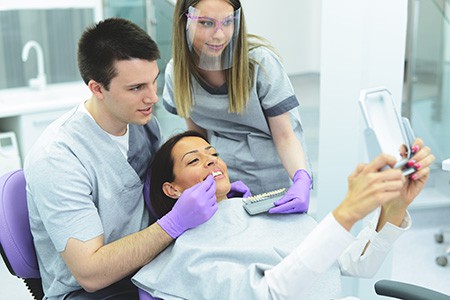 Professional whitening treatments use stronger, dentist-approved whitening agents that offer faster, more noticeable results than over-the-counter (OTC) options. While drugstore products like whitening strips or toothpaste may lighten teeth by a shade or two over several weeks, professional treatments (whether in-office or take-home) can whiten teeth several shades in just days. Additionally, custom trays provided by your dentist ensure more even results and reduced irritation to the gums or enamel compared to one-size-fits-all drugstore options.
How long do the results of professional teeth whitening last?
Results vary by lifestyle, but most patients enjoy their whiter smile for 6 months to 2 years. Factors that influence longevity include coffee, wine, and tobacco use, as well as oral hygiene habits. Patients who avoid staining foods, brush regularly, and schedule touch-up treatments when needed often maintain their results longer. Using a straw for beverages and rinsing after meals can also help minimize new staining.
What foods and drinks should I avoid after whitening my teeth?
In the first 48 hours after whitening, your enamel is more porous and vulnerable to stains. It's best to avoid coffee, tea, red wine, dark berries, soy sauce, tomato-based sauces, and dark sodas. Smoking and tobacco use should also be avoided. Stick to lighter-colored foods like chicken, rice, bananas, and white cheeses. Drinking through a straw and rinsing with water after eating can help preserve your results over time.
Is teeth whitening safe for teens or older adults?
Whitening is generally safe for older teens and adults, but age-specific considerations apply. For teens, whitening should wait until all permanent teeth have erupted, and sensitivity should be monitored. Older adults may have discoloration caused by medications, enamel thinning, or worn restorations, all of which can affect whitening outcomes. A dental evaluation helps determine if whitening is appropriate and which method is most effective.
Can I combine teeth whitening with other cosmetic procedures?
Yes, many patients choose to whiten their teeth before undergoing cosmetic treatments like veneers or bonding. Whitening beforehand allows your dentist to match any new dental work to your improved tooth color. Teeth whitening is often the first step in a smile makeover, helping you achieve an overall brighter and more even-looking result.
Can teeth whitening remove deep, long-term discoloration?
Professional teeth whitening is effective at removing many surface-level and moderate stains, including those caused by coffee, wine, and tobacco. However, intrinsic stains — those that develop deep within the tooth — can be more resistant. These may be caused by certain medications (like tetracycline), trauma, or developmental conditions. While whitening may lighten intrinsic stains slightly, more dramatic improvement often requires alternative cosmetic options like porcelain veneers or bonding. Your dentist will evaluate the cause of discoloration and recommend the most appropriate treatment based on your goals.
Can whitening treatments make my teeth look unnaturally white?
Teeth whitening results are highly customizable: your dentist can help you achieve a natural-looking shade that brightens your smile without appearing overly artificial. Some patients worry about achieving the “too white” look, but that’s rarely the case with professional treatment. The goal is to enhance your natural tooth color, not create an unnatural glow. Most systems offer multiple shade levels, and your dentist will help you choose one that complements your skin tone and facial features for a healthy, radiant result that still looks likeyou.
Contact Dental Health Associates
Teeth whitening at Dental Health Associates really does work like magic! Contact our Toledo Dentists to learn more about our teeth whitening services.