Dental Bridges In Sylvania & Toledo, OH
At Our Dental Office in Sylvania
Dental Health Associates may recommend a dental bridge to you if you have missing teeth and have good oral hygiene practices. This dental bridge will permanently fill the gaps left by missing teeth with new, natural-looking artificial white teeth and will ultimately keep the surrounding teeth from drifting out of position. As the name suggests, dental bridges are held on by crowns placed over the teeth on both sides of the gap, creating a dental bridge. There are three main types of dental bridges:
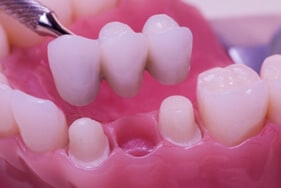
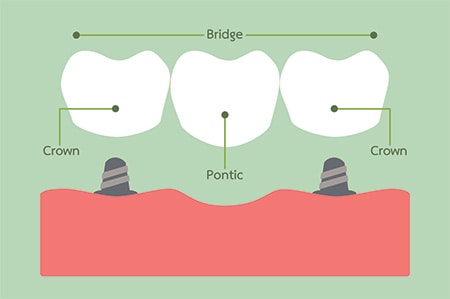
- Traditional bridges, which involve creating a crown for the tooth or implant on either side of the missing tooth, with a pontic, or replacement tooth, in between – these are the most common type of bridge and are made of either porcelain fused to metal or ceramics;
- Cantilever bridges, which are used when there are adjacent teeth on only one side of the missing tooth or teeth, and;
- Maryland bonded bridges (also called a resin-bonded bridge or a Maryland bridge), which are made of plastic teeth and gums supported by a metal framework. Metal wings on each side of the bridge are bonded to your existing teeth.
Installing a dental bridge is referred to as ‘fixed’ dentistry, as bridges are virtually indistinguishable from your natural teeth! Some of the advantages of dental bridges include:
- The ability to speak and chew properly
- Increased biting strength
- A restored smile!
- Maintaining the shape of your face
- Preventing remaining teeth from drifting out of position
- Preventing tooth decay and gum disease
- Preventing temporomandibular joint (TMJ) disorders
Dental Bridge Placement Process
After the type of bridge and materials to be used are determined, the teeth that support the bridge are prepared. Local anesthetic is administered and small amounts of tooth structure are removed from the supporting teeth. Impressions are taken of the prepared teeth and a model of the teeth is created to help the dental laboratory technicians that craft the custom bridge. While the permanent custom bridge is being fabricated, a temporary bridge is placed to protect the teeth and gums from damage.
Once the permanent bridge is ready, the temporary bridge is removed. If a traditional bridge is used, the false tooth fits into the gap and the crowns slip over the surface of the teeth on either side of the gap. If a cantilever bridge is used, the artificial tooth fits into the gap and the crowns attach to the adjacent teeth on one side of the gap. If a Maryland bonded bridge is used, the artificial tooth fits into the gap and metal or porcelain wings are bonded to the existing teeth on each side of the gap.
The permanent restoration is cemented into place using a strong dental adhesive. Instructions on how to care for the newly placed bridge are explained; special materials such as a bridge floss threader can help clean the areas around the bridge. The bridge is fixed into place and cannot be removed unless it is by a dentist. Some bridges are attached to dental implant posts for added stability.
What to Expect After Your Dental Bridge Procedure
Dental bridge recovery varies by patient. You may have tooth and gum soreness and tooth sensitivity when you chew food, but these side effects typically go away a week or so after the procedure. Most patients feel comfortable with their dental bridge after two weeks when the gum tissues have healed and sensitivity improves.
Over-the-counter pain relievers and prescription pain medications can ease soreness and tenderness after a dental bridge procedure. Consuming cold or hot foods and beverages can cause tooth sensitivity, which is normal. However, ongoing pain and sensitivity could indicate a larger issue. Call our Sylvania office to speak with one of our dentists if you have severe discomfort or persistent symptoms several weeks after your dental bridge procedure.
Our dentists may recommend sticking with soft foods for the first couple of weeks. Avoid smoking and tobacco products because they can affect the gum tissue around the bridge and cause other concerns that may lead to dental bridge failure.
Insurance Coverage and Dental Bridges

Dental bridges are a restorative dentistry option routinely covered by dental insurance providers. However, your dental plan may cover just 40% to 50% of the cost of your dental bridge and may require a waiting period before your procedure. Patients are responsible for their co-pay and other expenses not paid for by their insurance plan.
Dental insurance mitigates some of the cost of a dental bridge. Patients should discuss their plan benefits with their insurance to understand their financial responsibility, including maximum limits for dental procedures, co-pays, and deductibles.
The cost of your dental bridge includes X-rays, office visits, periodontal treatment (if necessary), and the procedure. Implant-supported dental bridges carry a higher price tag but offer additional benefits.
How to Care for Your Dental Bridge

People with dental bridges can care for their dental restorations like natural teeth with a few modifications. Floss once a day and brush your teeth and under the dental bridge with a soft-bristled toothbrush twice daily or more often if necessary. Hard-bristled brushes are too abrasive for dental bridges and may damage the dental crowns, pontic (false tooth), and your tooth enamel.
Use an interdental brush or floss threader to clean around the dental bridge. Our dentists recommend using an antibacterial mouthwash to reduce plaque and bacteria in the mouth. You may rinse with mouthwash after flossing to wash away loosened food debris, after meals, and to freshen your breath.
Maintaining your dental bridge and oral health involves regular dental exams and cleanings to detect issues with your teeth and dental restorations before they become more significant concerns.
Avoid eating hard foods that may damage or loosen the dental crowns on the abutment teeth and the artificial tooth.
Dental Bridges Vs. Dentures
The main difference between dental bridges and dentures is that bridges are permanently fixed in place while dentures are mostly removable. A dental bridge replaces one or more missing teeth in a row, while dentures replace several missing teeth in sporadic areas along the top or bottom arches or an entire arch. Partial dentures are custom-made and use metal attachments to secure the prosthetic in place when you eat or speak and can be taken out for cleaning. A dental bridge may require tooth extraction to prepare your mouth, but dentures fit your mouth without modifications as long as your remaining teeth are healthy.
Dental bridges provide more stability and act like natural teeth without affecting your speaking or eating abilities. Partial dentures may cause speech changes and make eating hard foods challenging.
A dental bridge is best for someone with one or more consecutive missing teeth and provides a natural appearance with porcelain crowns. However, partial dentures are best for people missing multiple teeth in various places on their upper or lower dental arch. Dentures may be a better choice if your remaining teeth are not strong enough to support a bridge.
Dental Bridges FAQs
Is a dental bridge a better solution than a dental implant?
Dental bridges and dental implants are two separate ways to transform a smile with a missing tooth or teeth. Each option has its own pros and cons. Dental implants require a surgical procedure. Because they are attached to the jawbone, they help to preserve the strength of the bone and are considered much more durable. They are also significantly more expensive than dental bridges, which may make the latter preferable to some patients, particularly those needing to replace multiple teeth at once.
How many replacement teeth does a bridge contain?
Ultimately, that depends on how many missing teeth you have. Some bridges fill in one missing tooth, while others replace multiple teeth. Usually, bridges do not have more than three prosthetics in a row because they need to be properly supported. Your dentist may recommend implant-supported dentures/bridges to address many missing teeth simultaneously.
Are dental bridges removable?
A dental bridge is a fixed prosthetic, which means it securely stays in place for many years. There is no reason to remove a bridge anyway, since it looks, feels, and functions like natural teeth. The only type of removable teeth are dentures and partial dentures.
Can I still get a cavity with a dental bridge?
While prosthetic teeth cannot get cavities, any of the natural teeth next to or supporting your bridge are susceptible to infection. That’s why it remains important for you to brush and floss your bridge, just as you would your natural teeth, to remove plaque and bacteria that can cause cavities or inflame your gums.
Can a dental bridge be repaired if it becomes loose or damaged?
Yes, in many cases, a loose or damaged dental bridge can be repaired, especially if the issue is caught early. If the bonding cement fails or the crown material chips, your dentist may be able to re-cement or restore the affected area. However, if underlying support teeth are compromised, a full replacement may be required. Prompt attention helps preserve your oral health and prevents more severe complications.
What materials are dental bridges typically made of?
Dental bridges can be crafted from several materials, including porcelain fused to metal, all-ceramic, zirconia, or metal alloys. Porcelain and zirconia bridges are often chosen for their durability and ability to mimic natural tooth color, especially in visible areas. Metal-based options may be used for back teeth due to their strength. Your dentist will recommend the best material based on location, aesthetics, and bite pressure.
Am I a good candidate for a dental bridge if I have gum disease?
If you have active gum disease, your dentist will likely recommend treating the infection before placing a bridge. Healthy gums and stable teeth are essential for long-term bridge success. Once gum disease is managed and oral health improves, many patients become eligible for bridge placement.
Can a dental bridge be placed after a tooth extraction?
Yes, but the area usually needs to heal before a bridge is placed. Healing time allows the gum tissue and bone to stabilize. In some cases, a temporary bridge may be used to preserve aesthetics and function while the site heals. Your dentist can determine the appropriate timeline based on the complexity of your extraction and the type of bridge.
How long does it take to get used to a dental bridge?
Most patients adjust to a dental bridge within one or two weeks. During this time, you may notice slight changes in chewing, speech, or pressure on adjacent teeth. Practicing good oral hygiene, avoiding very hard foods, and following your dentist’s instructions can ease the adjustment period and help the bridge feel like a natural part of your bite.
Can I eat normally with a dental bridge?
Yes, once the bridge has settled and your gums are no longer sensitive, you can return to a normal diet. However, it’s wise to avoid overly sticky or hard foods, especially in the first few weeks after placement. Foods like ice, popcorn kernels, and caramel can put undue stress on the bridge and increase the risk of damage.
How long do dental bridges typically last before needing replacement?
With proper oral hygiene and routine dental visits, a dental bridge can last 10 to 15 years, possibly even longer. Exact longevity depends on factors such as the material used, the care of the surrounding teeth, and habits such as grinding or chewing hard foods. While bridges are durable, they are not permanent and may eventually need replacement due to wear, changes in the supporting teeth, or gum recession. Regular cleanings and checkups enable your dentist to monitor the bridge and identify potential issues early.
Contact Dental Health Associates Today
Our Toledo dentists are so committed to high-quality crown, veneer, and bridge restorations that we have our own in-house dental lab. The lab is staffed with dental ceramists who ensure that your porcelain restorations are all perfectly matched to your individual smile.