CROWNS & BRIDGES

Restore your bite and the natural beauty of your smile.

Flawless Restoration

Porcelain Dental Crowns

A crown is a restoration that covers a tooth in order to strengthen it as well as restore it to its normal shape and size. A crown may be placed to support a large filling when there is little remaining tooth structure, attach a bridge, protect weak teeth from fracturing, or restore fractured teeth.

Dental Crowns, or caps for teeth, look and function just like natural teeth. Porcelain crowns blend in with surrounding teeth and provide a strong, long-lasting repair for broken teeth, cracked teeth, or yellowed teeth. We use materials for crowns that will provide the longest lasting benefits to our patients.

CEREC Same-Day Crowns

We offer CEREC Same-Day Crowns to patients who want to have the procedure completed in a single appointment. With the help of advanced technology, we can create a customized cap that matches your other teeth right here in our office. After the dentist places the crown, you have no need to return for a follow up!
Dental Crowns
Why Choose Porcelain?

Benefits of Dental Crowns

  • Conceal cracks & chips
  • Conceal yellow teeth
  • Protect remaining natural tooth
  • Minimize tooth sensitivity
  • Completely allergy free
  • Support damaged teeth
  • Correctly align a patient’s bite
  • Anchor for a dental bridge

Uses of Dental Crowns

Dental crowns can be either restorative or cosmetic in nature — often both. Teeth that have become weak following infection and/or decay may need support to bite fully and survive long term. This is especially true following a root canal. Some crowns are purely cosmetic, used to cover up a crooked, cracked, or misshapen tooth to create a more attractive smile.

How Are They Placed?

The tooth is prepared, and instead of using messy traditional putties, we use an iTero® scanner. This advanced digital technology captures detailed, real-time images to create highly accurate 3D models of your teeth and surrounding tissues. If the crown is being crafted in an outside lab, a temporary crown is placed until your second appointment.

However, our team also offers porcelain crowns with the revolutionary CEREC machine, allowing us to use those same digital 3D scans to fit, craft, and place permanent restorations in a single visit without any temporary crowns!

Understanding Your Options

Crowns, Bridges, and Veneers

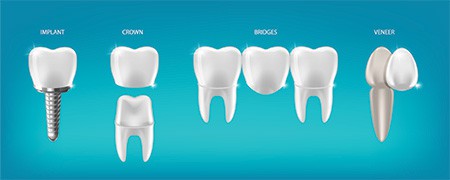
These three options can restore and improve the appearance of your teeth, but they provide different benefits.

Dental Implants

The ideal choice for a lost tooth. They replace a missing tooth and its root with a titanium screw placed in the jaw, connected to an abutment and an artificial tooth. They are more stable than conventional dentures and bridges.

Porcelain Veneers

Thin shells that cover fractured, chipped, discolored, or slightly misaligned teeth. They are bonded to the front of the affected tooth and are considered purely cosmetic (insurance typically does not cover them).

Dental Crowns

Caps made of porcelain that cover the entire tooth structure to restore function and appearance. Best for repairing broken teeth, deep decay, or old restorations. They can also act as the artificial tooth on top of an implant.

How to Care for Your Crowns

Most crowns last between 10 and 15 years before replacement is warranted. They do not require special care. Good maintenance includes:

  • Brushing every morning and night
  • Flossing once daily
  • Avoiding sticky or hard foods (ice, hard candies)
  • Quitting habits like nail-biting or using teeth as tools
  • Getting treatment for teeth grinding (nightguard)

Recovery After a Dental Crown

The recovery process is short, but it can take a couple of weeks to adjust. Hot and cold foods may cause sensitivity, especially if you have gum recession. If you have ongoing pain, contact our dentists to schedule an exam.

Insurance Coverage

Dental insurance covers preventative care and often covers dental restorations to improve oral health and restore function.

Your plan may cover 50% of your dental crown procedure for oral health purposes, such as repairing a cracked tooth. Crowns for purely cosmetic concerns may not qualify under your plan. Our staff is happy to help verify your benefits!

Dental Care
Crowns Q&A

Dental Crown FAQs

How do CEREC crowns compare to traditional crowns?

Same-day CEREC crowns are crafted using digital imaging and milling technology right in the office, allowing you to receive your crown in a single visit. Traditional crowns require multiple appointments and a temporary crown. Both are durable and effective, but CEREC offers unmatched convenience.

How long do porcelain dental crowns typically last?

Porcelain crowns can last anywhere from 10 to 15 years, and often much longer with proper care. Their lifespan depends on bite pressure, oral hygiene habits, and avoiding habits like chewing ice or using teeth as tools.

What issues can crowns fix besides broken teeth?

They are versatile and address cosmetic and structural concerns. They improve the shape or color of a tooth, restore worn-down teeth, cover a tooth after a root canal, or anchor a dental bridge.

Will my crown feel or look different from natural teeth?

Modern porcelain crowns are carefully shaped and color-matched to blend seamlessly. Most patients quickly adjust to the feel within a few days. If the bite feels uneven, our dentists can make minor adjustments.

Dental Bridges
Replace Missing Teeth

Dental Bridges

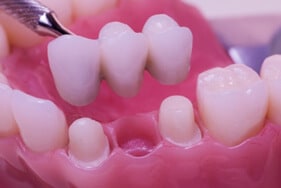
A fixed bridge is used to replace missing teeth. A bridge helps to create a normal bite, prevent stress on the dental arch, prevent the drifting and tilting of adjacent teeth, inhibit decay in difficult areas, and slow the onset of periodontal diseases.

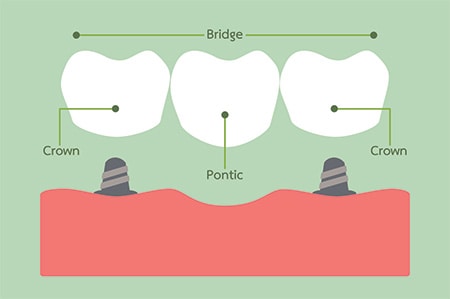
Dental Health Associates may recommend a bridge if you have missing teeth and practice good oral hygiene. It permanently fills gaps with new, natural-looking artificial white teeth. As the name suggests, dental bridges are held on by crowns placed over the teeth on both sides of the gap.

Advantages of Dental Bridges:

  • Restore your smile
  • Speak and chew properly
  • Increase biting strength
  • Maintain facial shape
  • Prevent teeth from drifting
  • Prevent TMJ disorders
Bridge Options

Types of Dental Bridges

Traditional Bridges

The most common type. Involves creating a crown for the tooth or implant on either side of the missing tooth, with a replacement tooth in between.

Cantilever Bridges

Used when there are adjacent teeth on only one side of the missing tooth or teeth.

Maryland Bonded Bridges

Made of plastic teeth and gums supported by a metal framework. Metal wings on each side are bonded to your existing teeth.

The Placement Process

  • 1

    After determining the bridge type, local anesthetic is administered and small amounts of tooth structure are removed from the supporting teeth to prepare them.

  • 2

    Instead of using traditional messy putties, we use an iTero® scanner to create highly accurate digital 3D models of your mouth. These real-time digital images are used by the lab to craft your custom bridge. A temporary bridge is placed to protect the teeth and gums.

  • 3

    Once ready, the permanent bridge is cemented into place using a strong dental adhesive. It is fixed into place and cannot be removed except by a dentist.

Bridge placement Dental Bridge

Recovery After Procedure

Recovery varies by patient. You may have tooth and gum soreness and sensitivity when you chew, but these typically go away in a week or so. Most patients feel comfortable after two weeks when tissues have healed.

Over-the-counter pain relievers can ease soreness. Stick with soft foods for the first couple of weeks, and avoid smoking, which can affect gum tissue and lead to failure.

How to Care for Your Bridge

Care for your restorations like natural teeth with a few modifications. Floss daily and brush with a soft-bristled toothbrush. Use an interdental brush or floss threader to clean around the bridge.

Avoid hard foods that may damage the crowns or artificial tooth. Regular dental exams are essential.

Bridges vs. Dentures

Dental bridges are permanently fixed in place and replace one or more missing teeth in a row. They provide stability and act like natural teeth without affecting speech or eating.

Dentures (or partials) are mostly removable and replace multiple missing teeth in sporadic areas. They use metal attachments and can be taken out for cleaning. Dentures may be better if remaining teeth aren't strong enough to support a bridge.

Insurance Coverage

Dental bridges are a restorative option routinely covered by insurance. Your plan may cover 40% to 50% and may require a waiting period. We can help you understand your plan benefits.

Bridges Q&A

Dental Bridge FAQs

Is a bridge better than a dental implant?

Implants are surgically attached to the jawbone, preserving bone strength, and are more durable but significantly more expensive. Bridges may be preferable for patients needing to replace multiple teeth at once or those looking for a non-surgical option.

How many replacement teeth does a bridge contain?

Usually, bridges do not have more than three prosthetics in a row because they need proper support from surrounding teeth. If many teeth are missing, implant-supported dentures may be recommended.

Are dental bridges removable?

No, a dental bridge is a fixed prosthetic, securely cemented in place for many years. It looks, feels, and functions like natural teeth.

Can I still get a cavity with a dental bridge?

While prosthetic teeth cannot get cavities, the natural teeth next to or supporting your bridge are susceptible. It remains crucial to brush and floss around your bridge to prevent decay or gum inflammation.

Can a bridge be repaired if it becomes loose?

Yes, if caught early, a loose bridge can often be re-cemented or repaired. If the underlying support teeth are compromised, a full replacement may be required.

Am I a good candidate if I have gum disease?

Active gum disease must be treated before placing a bridge. Healthy gums and stable support teeth are essential for long-term bridge success.

Can it be placed right after a tooth extraction?

Usually, the extraction area needs to heal so gum tissue and bone can stabilize. A temporary bridge may be used to preserve aesthetics while the site heals.

How long do bridges typically last?

With proper oral hygiene and routine visits, a dental bridge can last 10 to 15 years, possibly longer. Exact longevity depends on the material, care, and avoiding habits like chewing hard foods.